
Birdhouse
Guest Cabin for a UNESCO-protected natural landscape
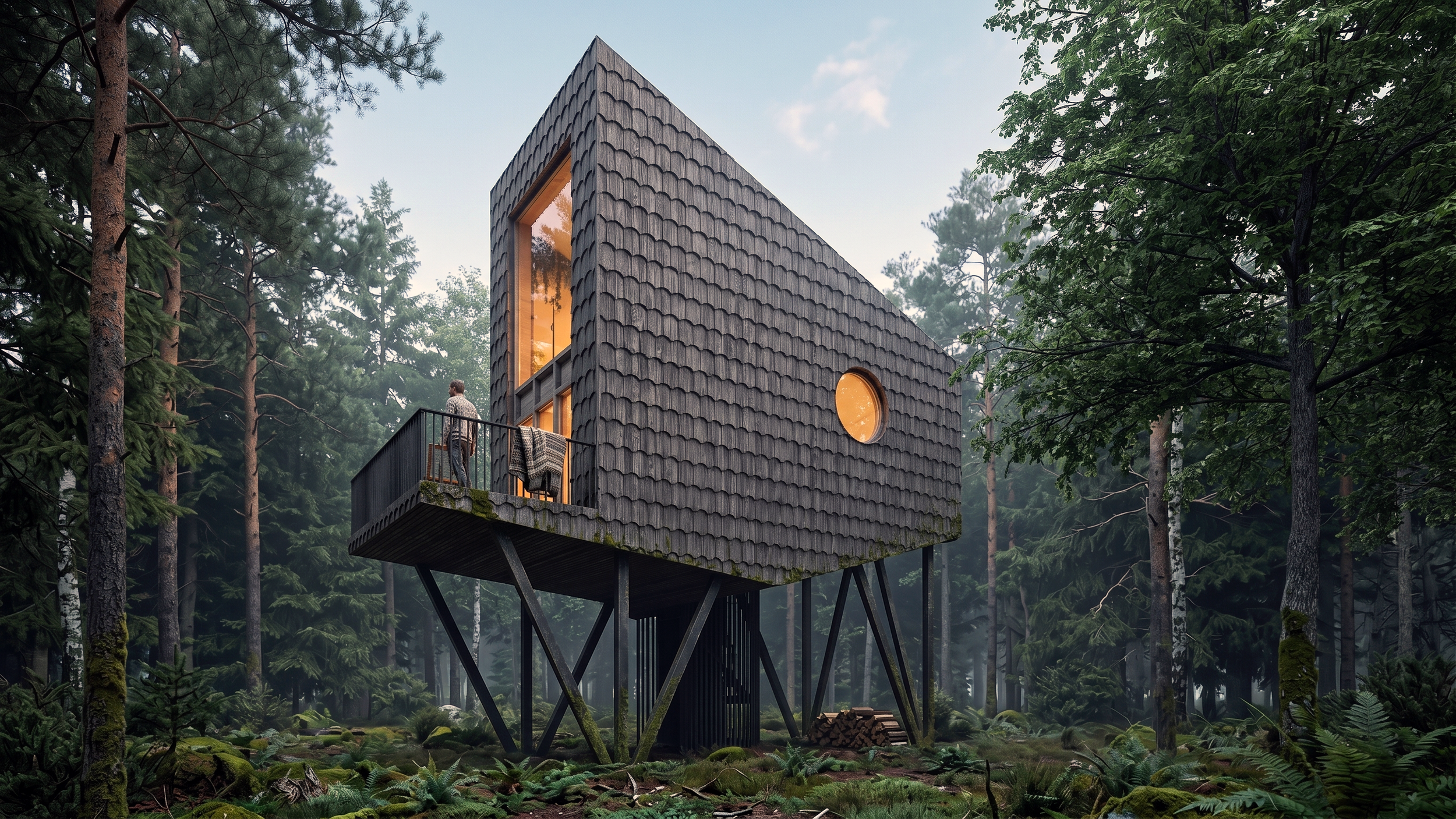
We were given a unique opportunity to design one of the signature guest house typologies for a hotel complex set within a protected UNESCO cultural landscape and biosphere reserve.
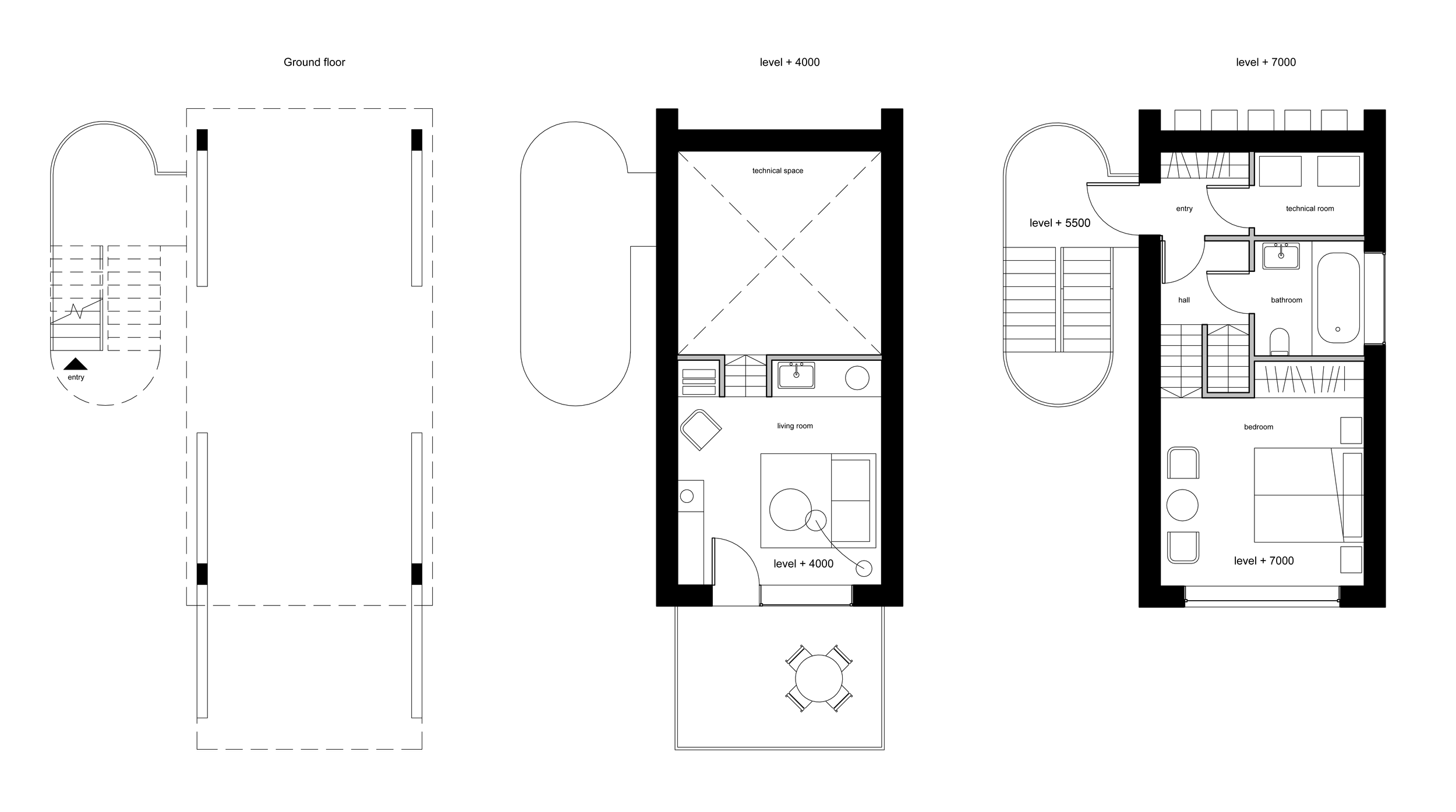
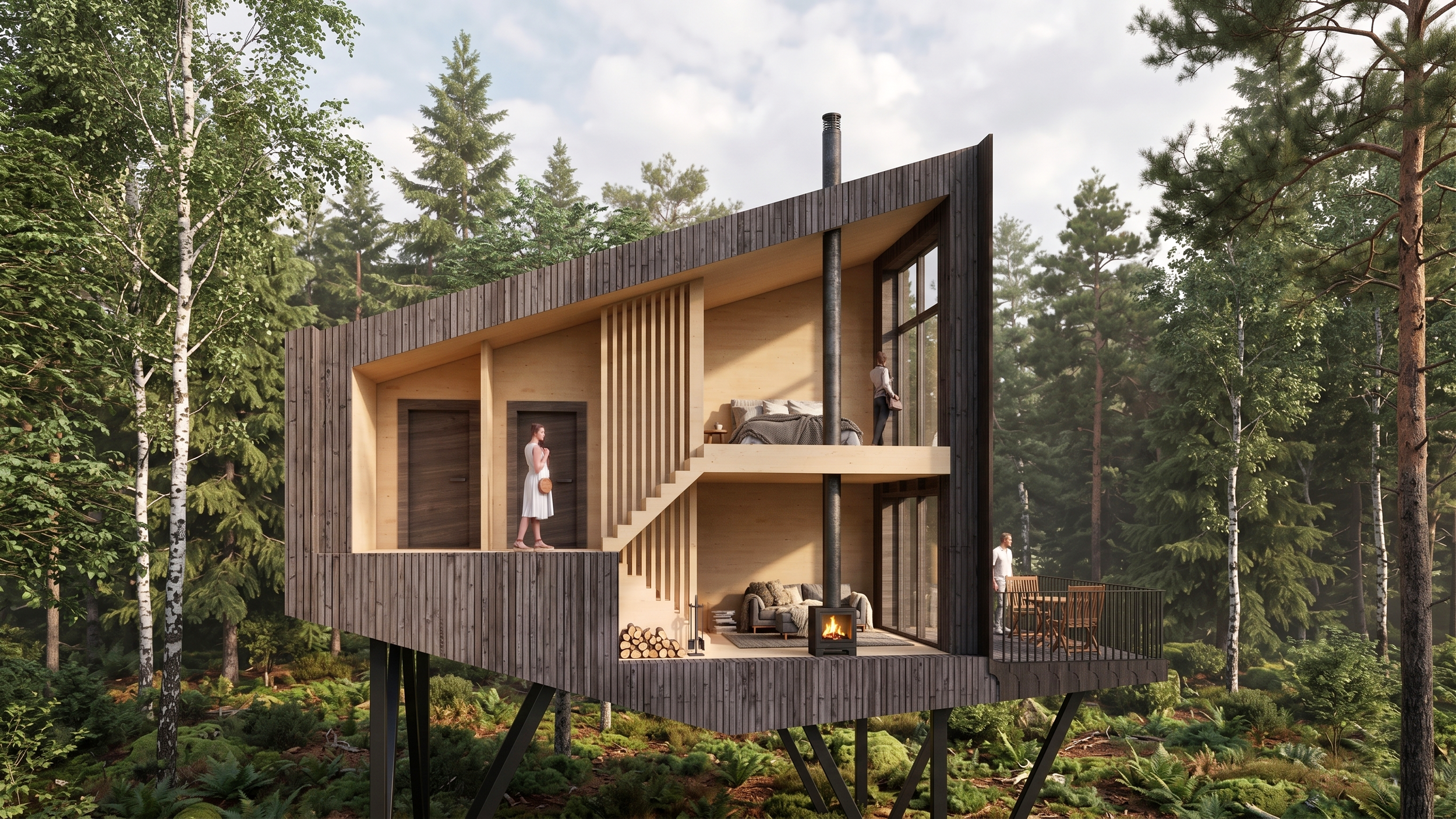
Birdhouse is a compact yet remarkably cozy 42 m² cabin designed for comfortable accommodation of a family of 2–4 people
Program: hotel, hospitality
Area: 42 sq.m
Status: architectural concept
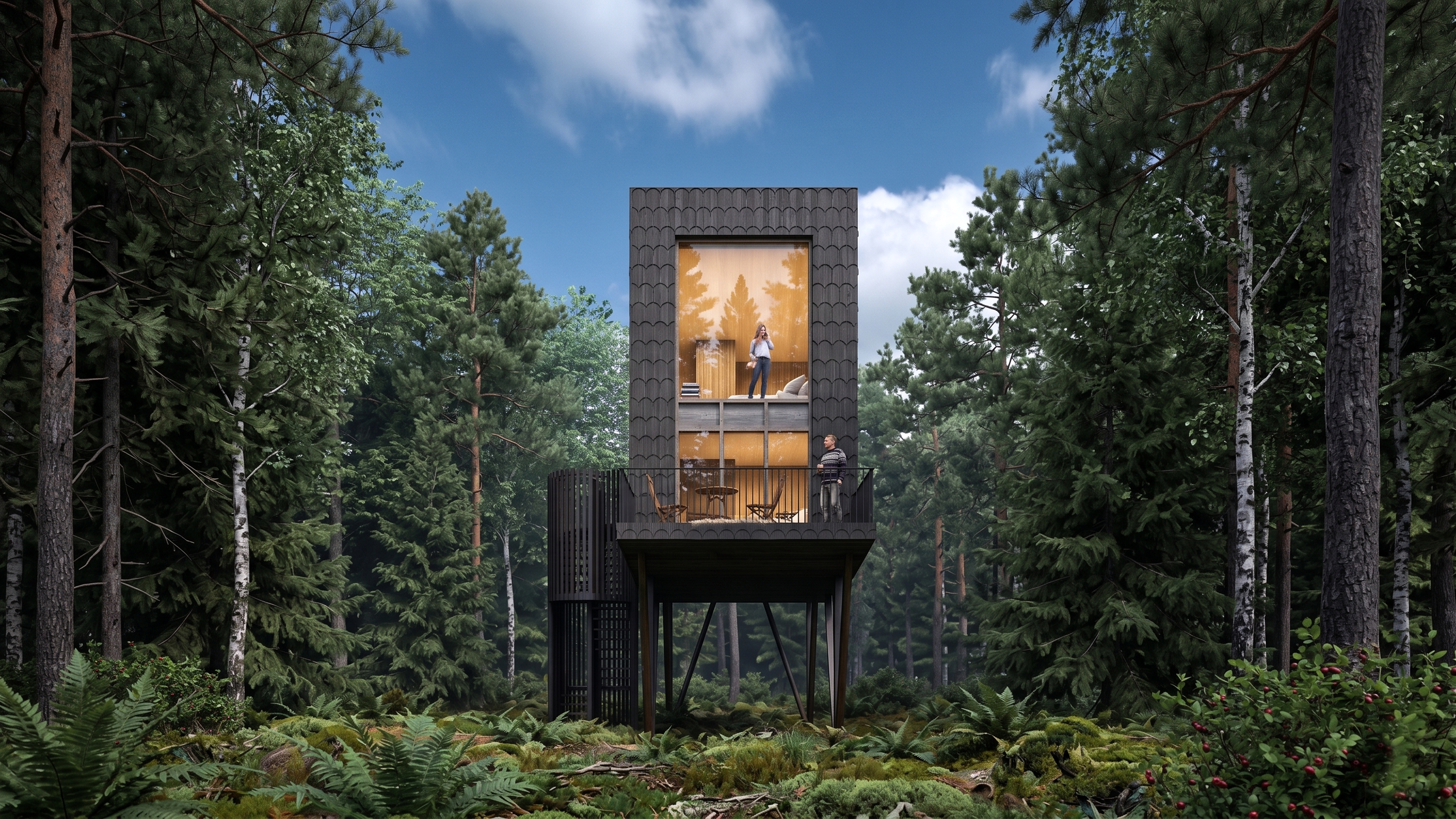
Thanks to its minimal footprint and narrow elongated volume, the house is carefully nestled among the trees, blending seamlessly into the forest and having minimal impact on the fragile protected landscape.
The south façade opens generously toward the grove, offering captivating views of the lake shimmering through the trees.
The roof is sloped from south to north, allowing even the low winter sun to penetrate deep into the interior, filling the space with warm natural light.
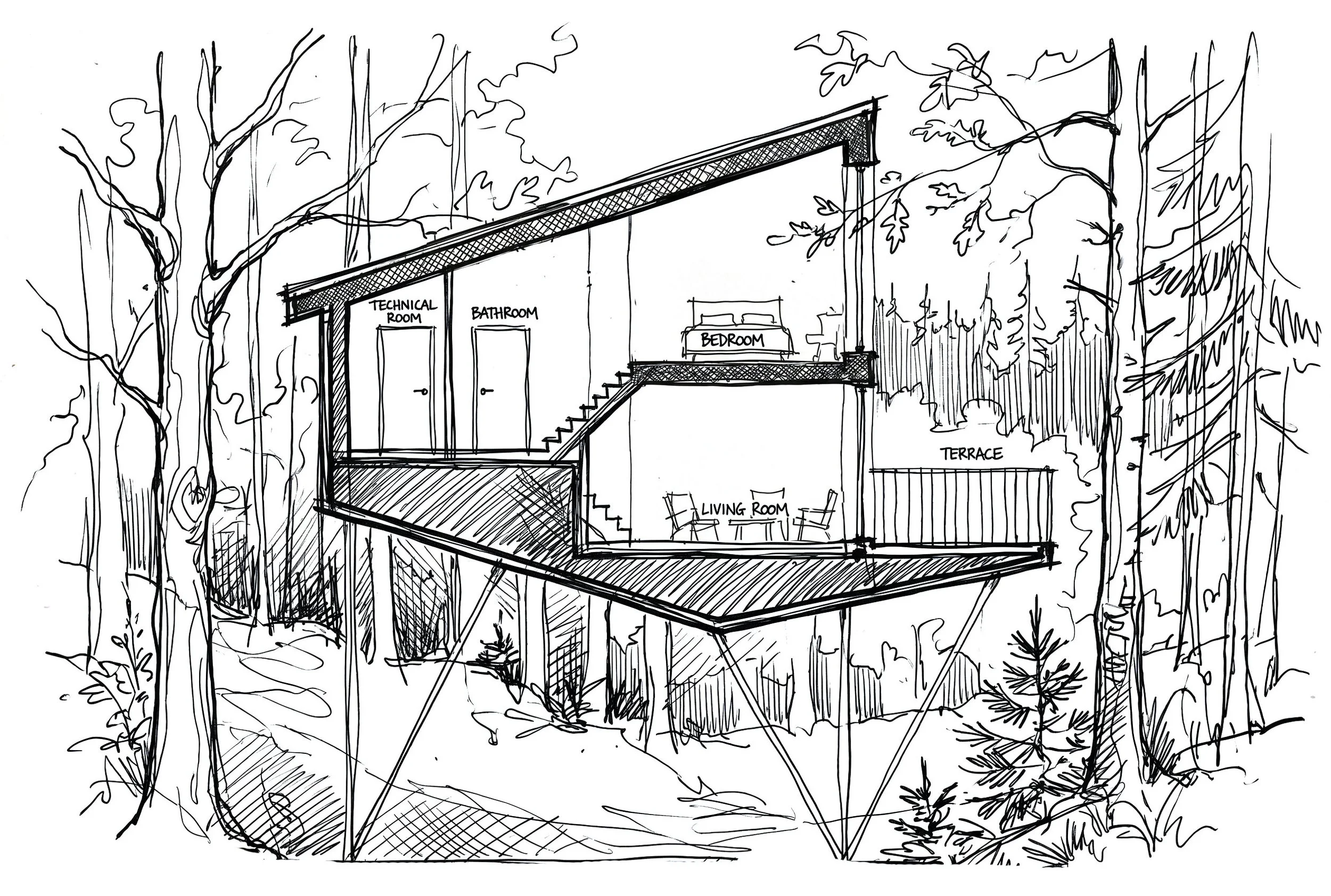
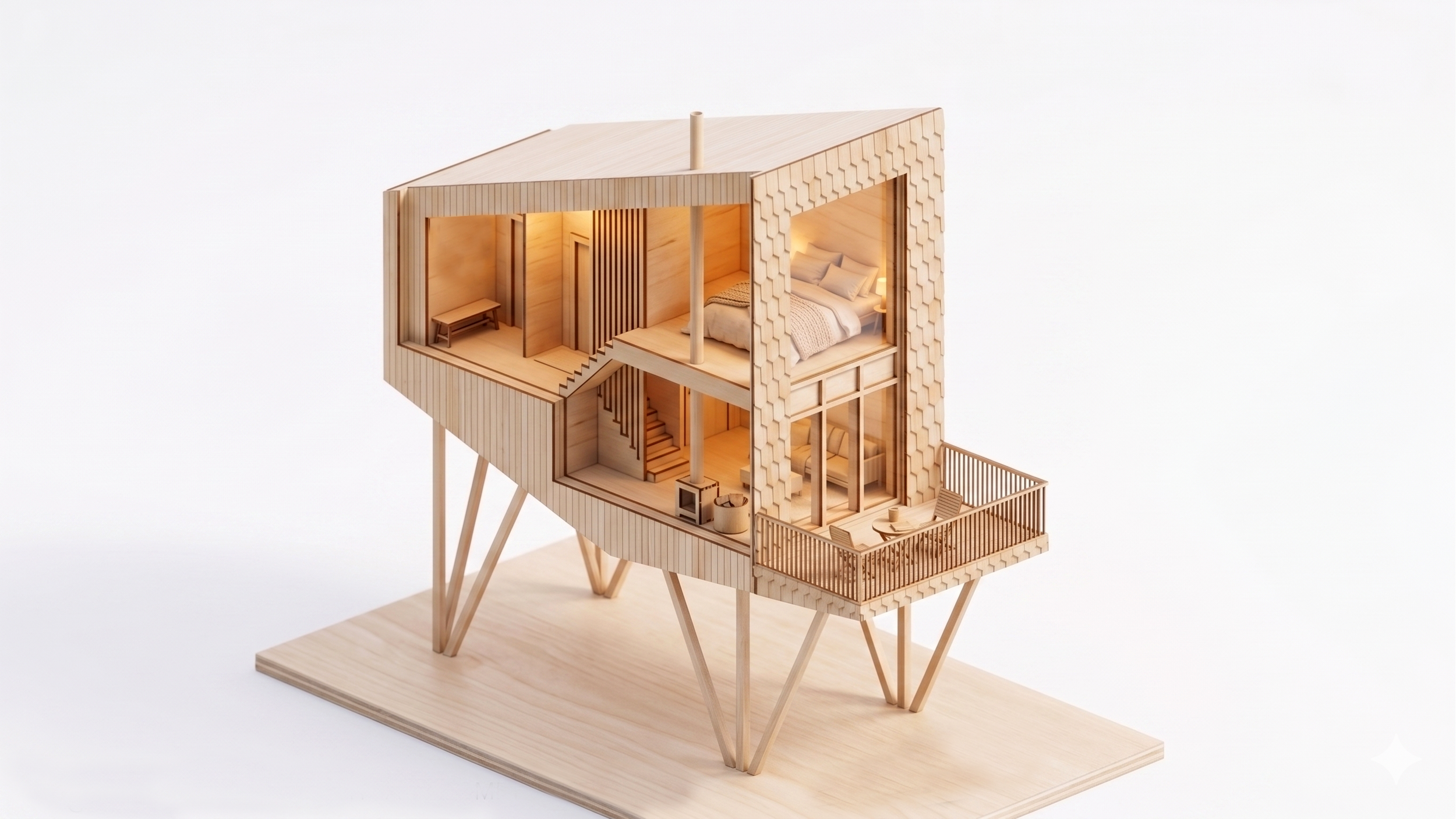
On the lower level, the living room flows directly onto a large terrace — a perfect spot for morning coffee surrounded by trees. The upper level offers comfortable bedroom with panoramic window. The layout is thoughtfully compact and highly functional.
Materials and architectural concept
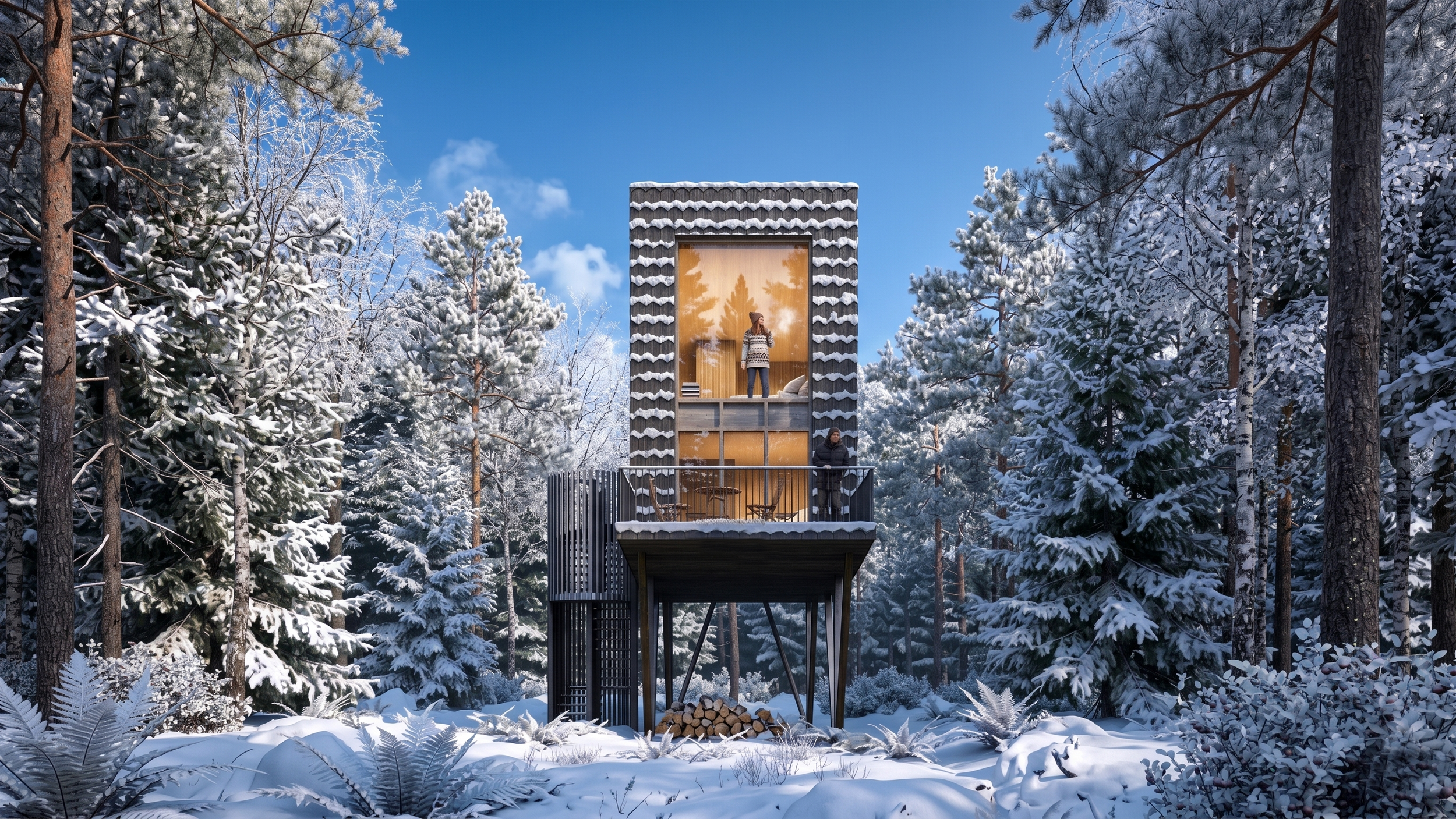
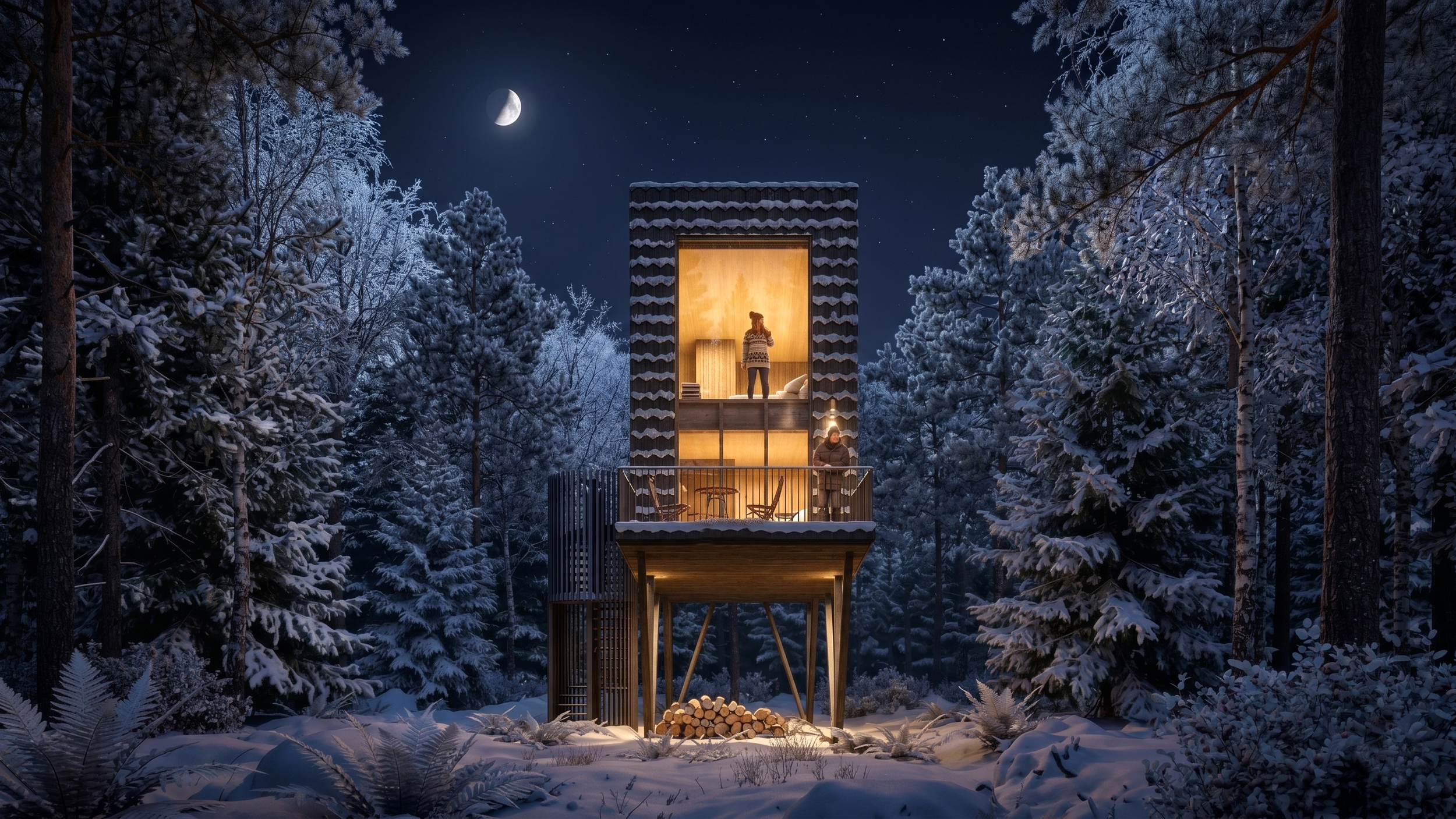
The house is built almost entirely from local, sustainable wood. The façades are clad in hand-crafted shingle (traditional wooden scales), executed using authentic local techniques. This textured “feathered” skin not only protects the building from harsh weather but also poetically references the plumage of the forest birds that inhabit the area.
Observation and education. Guests can discreetly observe bird life from the terrace or with binoculars. Inside the cabin, a small educational infographic introduces the species that may choose to nest here.
The north façade, deliberately blank and solid, integrates built-in nesting boxes of various sizes and types — from small ones for tits and flycatchers to medium-sized ones for starlings and redstarts.
What appears as decorative detailing is in fact a functional contribution to biodiversity conservation. The nesting boxes provide much-needed artificial cavities for cavity-nesting birds, many of which struggle to find suitable natural hollows in mature forests. In this way, the Birdhouse becomes a living ecological art object that actively supports the conservation mission of the protected area and its UNESCO biosphere reserve status.
Birdhouse is a harmonious blend of contemporary comfort, deep respect for nature, and a subtle dialogue with local building traditions.
It offers guests not just accommodation, but a gentle, immersive experience of coexisting with the surrounding wilderness while contributing to its preservation.